https://docs.google.com/document/d/1PBk9InE0pCGu2Zb5GYdBe2xKy9-1Yvm3vsHl3ZRLE-U/edit?usp=sharing
In this paper I will discuss the challenges faced by a very complex and diverse community of students around the nation; English as a Second Language students is not typically a major subject of discussion in academic circles. From personal experiences, to peer reviewed literature, I plan on exploring how very few opportunities are truly presented for this group of individuals. As a bilingual speaker, and well rounded student, I’m very much aware of the privileges that come with my language skills, especially considering the fact that my younger cousin falls in the crosshairs of two separated communities.
Being a student in today’s day and age in America is difficult enough, navigating through a variety of different societal and household expectations. However there are students who face other, more nuanced challenges in their educational careers; challenges that typically cannot be “resolved” or avoided. This level of individualized and situational experience of ESL learners leads to feelings of isolation, and a shortage of resources that are vital to a student’s success. Regardless of how teachers and faculty allocate assistance to students who need them, it is impossible to approach each individual with the personalized attention required to maximize learning. As Paul Miller puts it: “The problem stems partly from lack of funds and personnel in schooling, but it also reflects the influence of the government.” (Miller 786). Miller is a professor of English, at Akita International University in Japan. One of his primary areas of research is with LGBT issues and linguistic minorities in K-12 and university settings. He serves as editor-in-chief of Critical Inquiry in Language Studies: An International Journal, co-edits the Research in Queer Studies book series, and is the current president of the International Society for Language Studies.
While trying to focus on being a student, ESL students in particular must also face the consequences of a very polarized political environment. Being an immigrant has its own challenges, such as learning American customs and culture as well as a new language. ESL students often tackle mental health dilemmas such as depression and anxiety, and because of international conflict, many refugee students have fled to the United States. These students bring with them a plethora of new and different languages that each school system must find a way to support, they suffer from “Language shock… the anxiety an immigrant experiences when first entering a community where they do not speak, or are not proficient in, the dominant language” (Miller 787). This large quantity of needs cannot be evenly distributed amongst faculty and staff, they aren’t able to cross every single barrier they are presented with. Students are typically only provided with one block of time to learn and develop their English skills. They are expected to somehow learn efficiently in every class that is taught a foreign language, regardless of their English speaking ability.
This issue has become more and more mainstream in the education system: “as of the 2002-2003 academic year, 10.2% of all U.S students were considered limited english proficient students or english learners. (Callahan). Rebecca M. Callagan, a post doctoral researcher at the University of Texas, Austin, attributes this shift in demographic as a result of an influx in 1st and 2nd generation immigrant enrollment in K-12 schools. However each of these migrants face different traumas that otherwise interfere with their schooling. Three specific types of trauma: migration stress, acculturative stress, and traumatic stress. Traumatic stress in particular results from willful harm committed by another human being, and many refugees have been diagnosed with Post Traumatic Stress Disorder due to their traumatic stress: “research shows that stress, and in particular, PTSD, can negatively influence academic achievement and, more specifically, language acquisition” (Finn). Complex barriers like mental health are not problems that cannot be easily solved, coupled with the shortage of ELL teachers, and the overall increase of students across America has made it increasingly more difficult for immigrants to assimilate. It is not only school-aged English learners, but also their parents who must also assimilate into the culture by learning English, especially for employment.
The effects of the pandemic have also had a concerningly larger effect on the multilingual community than their native speaking peers. “In California, the UCLA Center for Transformation of Schools found that chronic absenteeism for English Learners tripled after the pandemic” (Marcus). This demonstrates the extreme levels of difficulties that are faced by English learners in schools, and how important the classroom is for learners overall. In Texas, according to Kera News, many ESL students lost the only reliable immersive space they had for English learning, and as a result, students returned to school with weaker foundations and confidence. Not only were students talking to screens during the pandemic, making it harder to connect learning with real life, but some families weren’t able to afford laptops and other devices for every household member. Even when students would receive devices provided by the school, sometimes they would struggle accessing content. As one teacher at Concord High School in Concord mentioned, “You have to be fluent in the language just to know how to access the content, and a lot of my students are not” (Granados).
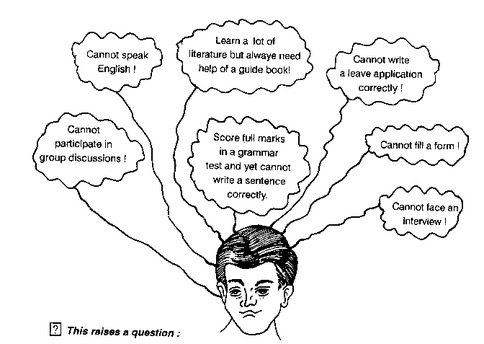
For personal reference, I have a younger cousin in my family that checks practically 80% of the boxes mentioned above. He is an immigrant who has experienced not only migration stress numerous times, but also acculturative stress. Migration stress is defined as “The result of a move from one’s home in a sudden unplanned situation” and acculturative stress as “ the attempt to function in a new culture or society” (Finn). My younger cousin Pablo has had a relatively nomad-esqe life so far. He was born in Spain, where he spent his developmental years in Pamplona, the city where the racing of the bulls takes place. There he learned how to walk, talk, and start to think for himself— then abruptly, at the age of 4, he and his family moved to Cali, Colombia, the hometown of his mother (my aunt). For less than a year, Pablo had to start fresh in a totally new continent and make new friends, follow a new education system, and live in a completely different environment than what he was used to in Europe. That settlement didn’t last that long unfortunately, and due to political and economic issues, Pablo had moved again at the age of 5 to the United States. While moving to Colombia had its own challenges, at least there was some familiarity in the language; Now, in this new country with a very different foreign language, he had to somehow adjust to another new schooling environment. His family lived with mine for a couple of months while they got themselves on their feet, Pablo attended the local public elementary school during this time, but after a couple of months, another move. This time he ended up in Lowell, MA— a totally different city than suburban upstate New York. This is when Pablo was also diagnosed with ADHD at the age of 7. There was another move during the FIRST Trump Administration where Paablo ended up back in Pamplona until 2021. Nowadays with the support of his extended family (myself included), Pablo managed to graduate middle school with Principal Honors on his diploma. Through all his unique struggles, his unrelenting desire to succeed, coupled with the never-ending support of his family— Pablo has been able to defy odds throughout his journey.
What it feels like to be an Emergent Bilingual/ESL/ELL
However even though his story remains a positive one, it is not very common. Millions of other immigrants around the country don’t even have a fraction of the support and resources that Pablo had. When all these factors get put together: the political pressures, mental health burdens, post pandemic setbacks, and educational limitations, all point to a pattern that cannot be ignored. ESL students face intersecting obstacles that do not function separately whatsoever, leaving these students to navigate an educational system that was never meant to support their circumstances. With a shortage of ESL teachers, a rise of trauma in refugee and immigrant students, and lack of individual support for students and their families, the divide between educational inequalities in America widens. Structural inequalities that shape not only academic gaps, but also lead to further opportunistic inequalities in sectors such as the workplace. Recognising that, until policymakers confront this dilemma holistically, rather than as isolated issues for political gain, ESL students will continue to bear the full weight of a system that is unequipped to support them. Additionally, schools must adhere to the overwhelming circumstances faced by ESL students, and recognize they must adopt comprehensive approaches that support the emotional, and cultural differences their students require. Until society decides to invest into this growing stigmatized community of Americans, English learners will continue to struggle.
7
Works Cited
Callahan, Rebecca M. “Tracking and High School English Learners: Limiting Opportunity to Learn.” American Educational Research Journal, vol. 42, no. 2, 2005, pp. 305–28. JSTOR, http://www.jstor.org/stable/3699378. Accessed 14 Nov. 2025.
Finn, Heather Bobrow. “Overcoming Barriers: Adult Refugee Trauma Survivors in a Learning Community.” TESOL Quarterly, vol. 44, no. 3, 2010, pp. 586–96. JSTOR, http://www.jstor.org/stable/27896747. Accessed 15 Nov. 2025.
Granados, Alex. “How Is COVID-19 Affecting ESL Students?” EducationNC, 7 Apr. 2020, www.ednc.org/how-is-covid-19-affecting-esl-students/. Accessed 1 Dec. 2025.
Marcus, Dr. Maggie. “English Learners Are Increasingly Struggling with Mental Health Challenges.” The Century Foundation, 25 Mar. 2025, tcf.org/content/commentary/english-learners-are-increasingly-struggling-with-mental-health-challenges /. Accessed 1 Dec. 2025.
Miller, Paul Chamness, and Hidehiro Endo. “Understanding and Meeting the Needs of ESL Students.” Phi Delta Kappan, vol. 85, no. 10, 2004, pp. 786–91. JSTOR, http://www.jstor.org/stable/20441682. Accessed 1 Dec. 2025.
Nick. “Common Challenges Faced by ESL Students.” World TESOL Academy, 19 Apr. 2023, www.worldtesolacademy.com/common-challenges-faced-by-esl-students/. Accessed 1 Dec. 2025.
The Texas Tribune. “Texas Struggled to Teach Students Learning English before COVID-19. The Pandemic Made It Worse.” KERA News, KERA, 9 Oct. 2021, www.keranews.org/education/2021-10-09/texas-struggled-to-teach-students-learning-english-before-covid-19-the-pandemic-made-it-worse. Accessed 1 Dec. 2025,
www.the74million.org/article/as-schools-brace-for-more-english-learners-how-well-are-they-being-served-now/. *picture 2*
tech4englishlearners.weebly.com/challenges-of-ell-students.html. *picture 3*

This entry is licensed under a Creative Commons Attribution-NonCommercial-ShareAlike 4.0 International license.

