Language and Literacy Personal Narrative Portfolio Draft
There is no such thing as speaking “one” language, even if it’s the only language you speak, there are many different forms of the same tongue that can be contradictory, and yet are correct. I used to consider myself bilingual, but as I reflect on what language means to me, I now understand that I am multilingual, as is anyone who can communicate.
My bilingual capabilities came about because I grew up convinced that my father only spoke Spanish, and that my mother only spoke English. They didn’t present me with a choice on having a favorite or preferred language; it was a necessity to know both depending on what type of needs I had from either parent. However, I typically spoke Spanish at home. I mean what was the need for it outside of the walls of my house? Nobody understood what I was saying anyways, I had to speak in English in order to be understood by others. However, as I started to grow up, I kept running into more and more Latinos. People who spoke the same language as me, and weren’t afraid to speak it outside of their home. It was a completely new world to me, but it went beyond speaking Spanish at home, they also had “street” slang as my parents would call it. Something I wasn’t very familiar with.
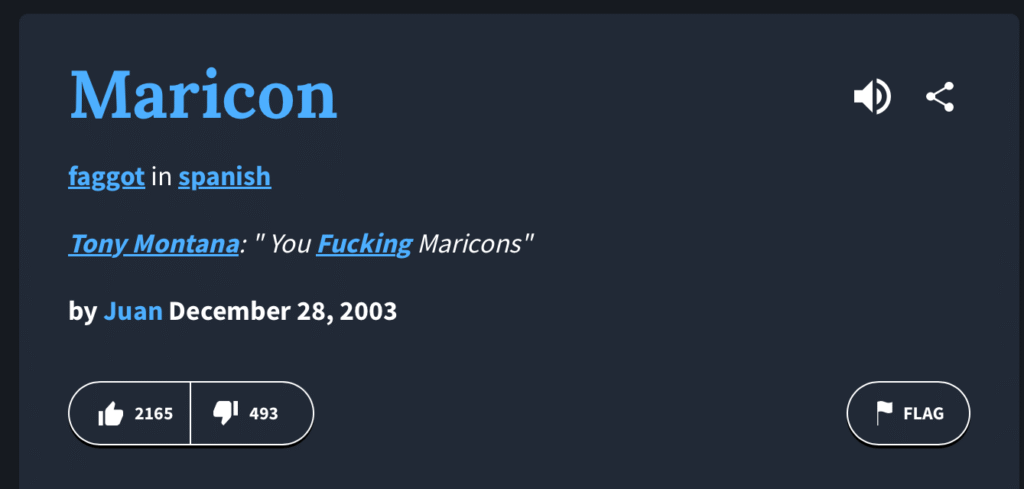
Flash forward to high school: new school, location, and people. I attended an all boys high school for athletes and the academically gifted. Being both academically gifted and an athlete, my quality of life improved compared to middle school. I maintained a high GPA, while playing for the varsity soccer team, and working a part time job. My hispanic coworkers would speak to me in what sounded like Spanish, and yet it sounded so alien to my ears. They would call each other words and phrases I can’t repeat in this essay (attached below), and I was so confused at the start. I heard Spanish, I saw people speaking Spanish, yet I did not understand what they were saying. For the first time in my life I felt insecure about my own language ability.
It took me a while to catch up, but I never felt like “giving up”. It was a very hard adjustment to learn all these new phrases, double entendres and funnily enough slurs. I had been speaking Spanish my entire life, my parents raised me that way, I would often “think” in Spanish. Yet when I was presented in front of this new crowd of Spanish speakers I found myself lost in translation, however I was determined. I kept my bilingual abilities to myself because I was very nervous of sounding “stupid” or “wrong”, but I paid attention.
After enough time being exposed to these different dialects of Spanish, I was finally able to understand my peers, and what they were saying to me. I was also able to respond to them in a language I felt comfortable speaking in, getting rid of the barrier that I had put up for myself. I learned that in reality, there was no lack of linguistic ability on my end, but rather I was just missing the confidence needed in myself to speak up.

This entry is licensed under a Creative Commons Attribution-NonCommercial-ShareAlike 4.0 International license.

